Relationship Stress After School Holidays: How Couples Can Reconnect

The school holidays are meant to be a time of fun, family connection and creating memories. But for many couples, the weeks after the holidays can bring an unexpected challenge: feeling tired, disconnected, or even more distant from each other.

You may have spent two weeks managing children’s activities, family commitments, travel, finances, meals, and changing routines. Perhaps you worked hard to make the holidays enjoyable for everyone — but somewhere along the way, your relationship was placed at the bottom of the priority list.

Relationship Stress After School Holidays: How Couples Can Reconnect

Now that school has returned and normal routines are starting again, this can be an important moment to reconnect as a couple.

Why do couples often struggle after the holidays?

During busy family periods, couples often move into “management mode”. Conversations become focused on:

  • Who is picking up the children?
  • What needs to be organised?
  • What bills need paying?
  • What activities are happening this week?

These conversations are necessary — but they don’t always create emotional connection.

Over time, couples can begin to feel more like co-managers of a household than loving partners.

You might notice:

  • More arguments over small things
  • Feeling unappreciated or taken for granted
  • Less affection or intimacy
  • Feeling lonely despite being together
  • Avoiding difficult conversations because you are both exhausted

Often, the issue is not that couples have stopped loving each other. It is that the demands of life have interrupted the connection they once shared.

The post-holiday reset: three ways to reconnect

1. Make space for a gentle conversation

Many couples try to solve problems when they are already frustrated. A better approach is to create a calm moment to reconnect.

Instead of starting with:
“Why don’t you ever help more?”

Try:
“I feel like we have been so busy lately, and I miss feeling close to you. Can we find some time to reconnect?”

A softer beginning creates safety and makes it easier for both partners to listen.

2. Notice the stress underneath the conflict

Arguments are often not really about the surface issue.

A disagreement about money, housework, parenting, or time together may actually be about deeper needs:

“I want to feel valued.”

“I want to know we are a team.”

“I miss feeling important to you.”

Imago Relationship Therapy helps couples look beneath recurring conflicts to understand the feelings and unmet needs that are driving the tension.

When couples learn to listen with curiosity rather than defensiveness, even difficult conversations can become opportunities for greater understanding.

3. Bring back small moments of connection

Rebuilding connection does not require grand romantic gestures.

Small, consistent moments often make the biggest difference:

  • A hug before leaving the house
  • Ten minutes talking without phones or distractions
  • Asking “How are you really feeling today?”
  • A walk together
  • Expressing appreciation for something your partner did

Relationships are strengthened through repeated moments of feeling seen, heard and valued.

Don’t wait until things become a crisis

Many couples seek counselling only when resentment has built up for years. But relationship support is not only for couples in crisis.

Counselling can help couples:

  • Improve communication
  • Break negative patterns
  • Rebuild emotional connection
  • Navigate parenting pressures
  • Strengthen their relationship for the future

The return to school after holidays can be a powerful opportunity to press the reset button — not only on routines, but on your relationship.

If you and your partner feel disconnected, stuck in the same arguments, or simply want to strengthen your bond, Imago Relationship Therapy can help you understand each other in a deeper way.

Reconnect. Understand each other. Build a stronger relationship.

For your convenience, appointments are available in the following locations:

ERINA, CENTRAL COAST NSW
Location Information

CROWS NEST, SYDNEY NSW
Location Information

ONLINE – SECURE MEETING ROOM
More Information

MAKE AN ENQUIRY


Christine Bennett
Imago Relationship Therapist
Caring4Couples – Reconnecting Intimacy and Connection


#ImagoRelationshipTherapy
#CouplesCounselling
#CouplesCounsellingCentralCoast
#CouplesCounsellingCrowsNest
#OnlineCouplesCounselling

Please Share!

Parenting Plans for School Holidays: How Family Mediation Helps Parents Reach Agreement

For many separated parents, school holidays can become one of the most challenging times of the year.

While children often look forward to holidays as a time for fun, relaxation and making memories, parents may find themselves worrying about who has the children, how long they’ll stay with each parent, travel arrangements, family traditions, and balancing everyone’s expectations.

The good news is that these issues don’t have to become a source of conflict.

Learn how Family Mediation helps separated parents create practical Parenting Plans for school holidays, Christmas, travel and special occasions while keeping children at the centre of every decision.

A well-designed Parenting Plan can provide clarity, reduce misunderstandings, and help children enjoy their holidays knowing exactly what to expect.

Why School Holidays Can Create Conflict

During the school term, routines are generally predictable. School attendance naturally structures where children are and when changeovers occur.

School holidays are different.

Parents may disagree about:

  • How the holidays should be divided.
  • Whether the holidays should be shared equally.
  • Interstate or overseas travel.
  • Christmas, Easter and other special occasions.
  • Time with grandparents and extended family.
  • Taking children on holidays with new partners.
  • Work commitments and childcare arrangements.
  • Notice required before making holiday plans.

Without clear agreements, uncertainty can quickly lead to frustration, arguments and disappointment.

Putting Children First

Children benefit most when they are free to enjoy time with both parents without feeling caught in the middle.

They shouldn’t have to worry about adult disagreements or feel responsible for making decisions about where they spend their time.

Parents who are able to cooperate and communicate respectfully provide children with a sense of security and stability, even after separation.

A Parenting Plan helps create that stability.

What Should a Parenting Plan Include?

Every family is different, but a comprehensive Parenting Plan usually considers:

School Holiday Arrangements

Will holidays be:

  • Shared equally?
  • Divided into weeks?
  • Alternated each year?
  • Adjusted around work commitments?

Some families divide each holiday in half, while others alternate entire holiday periods.

The best arrangement is the one that works for your family and, most importantly, meets your children’s needs.

Christmas and Special Days

Many parents choose to alternate:

  • Christmas Eve
  • Christmas Day
  • Boxing Day
  • New Year’s Eve
  • Birthdays
  • Mother’s Day
  • Father’s Day

Some families split Christmas Day itself, while others alternate the entire Christmas period each year.

There is no “one-size-fits-all” approach.

Travel

It’s helpful to agree in advance about:

  • Notice required before booking holidays.
  • Providing travel itineraries.
  • Emergency contact details.
  • Passport arrangements.
  • Interstate or overseas travel.
  • Consent requirements.

Planning ahead can prevent unnecessary conflict.

Communication During Holidays

Children often appreciate staying in touch with the parent they’re not with.

A Parenting Plan can outline:

  • Phone calls.
  • Video chats.
  • Appropriate times to make contact.
  • Flexibility if children are busy enjoying activities.

Keeping communication child-focused rather than parent-focused helps children feel connected to both parents.

Flexibility Is Important

Life changes.

Children grow older.

Sport, employment, friendships and changing interests all influence holiday arrangements over time.

A Parenting Plan should provide structure while allowing enough flexibility for parents to accommodate changing circumstances through respectful discussion.

The Benefits of Family Mediation

Many parents assume they need lawyers to resolve parenting disagreements.

In reality, mediation often provides a less stressful, faster and more affordable way to reach practical agreements.

During mediation, both parents have the opportunity to discuss concerns, explore options and develop solutions that suit their family’s unique circumstances.

Because parents create the agreement together, they are often more committed to making it work.

Helping Children Enjoy Their Holidays

Children rarely remember who “won” an argument.

They remember feeling relaxed, loved and free to enjoy time with both parents.

When parents work together to create clear holiday arrangements, children gain predictability, security and the freedom to simply be children.

A thoughtfully prepared Parenting Plan can reduce conflict, minimise misunderstandings and provide a roadmap that helps everyone navigate school holidays with greater confidence.

If you’re finding it difficult to agree on holiday arrangements or other parenting issues following separation, family mediation can provide a safe and constructive environment to work towards practical, child-focused solutions.

Ready to Create a Parenting Plan That Works?

If you’re struggling to agree on school holiday arrangements, Christmas, travel, or other parenting issues after separation, you don’t have to work it out alone.

Family Dispute Resolution (mediation) provides a safe, respectful and confidential environment where parents can explore practical solutions that put their children’s wellbeing first. Reaching agreement through mediation is often faster, less stressful and more cost-effective than going to court.

Whether you’re creating a Parenting Plan for the first time or updating an existing arrangement as your children grow, I’m here to help.

To arrange a Family Dispute Resolution appointment or to discuss how mediation may help your family, please contact Christine Bennett today. Together, we can work towards practical agreements that support your children and reduce conflict for the future.

Christine Bennett
Family Dispute Resolution Practitioner
North Shore Family Mediation

#ParentingPlans #ChildInclusivePractice #CoParenting #SchoolHolidays #FamilyMediation

Please Share!

Family Dispute Resolution: The Emotional Load of Separation and Its Impact on Children

Separation is rarely just a legal or practical process. For most parents, it is one of the most emotionally overwhelming experiences they will ever go through. Alongside the sadness and uncertainty, there are decisions to make about children, finances, living arrangements, communication, and the future of the family itself.

When emotions are high, it can feel impossible to have calm, productive conversations. Yet these conversations are often necessary to help children feel secure and supported during a time of enormous change.

Family Dispute Resolution (FDR) provides separated parents with a structured and supportive process to work through parenting and relationship breakdown issues in a respectful and child-focused way.

Family Dispute Resolution (FDR) provides separated parents with a structured and supportive process to work through parenting and relationship breakdown issues in a respectful and child-focused way.

The Emotional Reality of Separation

Even when separation is the right decision, it often brings a mixture of grief, anger, fear, guilt, confusion, relief, and anxiety. Many parents are carrying emotional pain while also trying to continue working, parenting, and managing daily life.

Some parents experience:

  • Fear about losing time with their children
  • Worry about finances and housing
  • Anger or resentment toward their former partner
  • Feelings of failure or shame
  • Anxiety about the future
  • Exhaustion from ongoing conflict
  • Difficulty communicating calmly
  • Pressure from extended family or friends

These emotions are normal. The challenge is that when emotions are intense, communication can quickly become reactive. Small disagreements can escalate, misunderstandings become common, and trust may disappear.

Many parents find themselves stuck in repeated arguments about schedules, holidays, schooling, routines, or decision-making. Over time, this conflict can become emotionally draining for everyone involved.

The Hidden Emotional Load Parents Carry

Separated parents often carry an invisible emotional burden that others may not fully understand.

There can be grief over the loss of the relationship and the future they imagined. There may also be guilt about how separation affects the children. Some parents feel torn between protecting themselves emotionally and remaining cooperative for the sake of the children.

At the same time, they are expected to make important decisions while under stress.

Parents may be trying to:

  • Manage their own emotional recovery
  • Support children through adjustment
  • Navigate financial stress
  • Create two functioning households
  • Communicate with someone they may no longer trust
  • Maintain routines and stability
  • Cope with loneliness or emotional overwhelm

This emotional load can leave parents feeling exhausted, reactive, or emotionally shut down.

How Separation and Conflict Affect Children

Children are deeply affected by parental separation, but it is not necessarily the separation itself that causes the greatest harm. Research consistently shows that ongoing parental conflict is one of the biggest predictors of emotional distress for children.

Children can struggle when they are exposed to:

  • Constant arguments
  • Hostile communication
  • Loyalty conflicts
  • Being asked to take sides
  • Negative comments about the other parent
  • Uncertainty and inconsistency
  • Emotional tension between parents

Children often love both parents deeply. When conflict continues, children may feel caught in the middle or responsible for keeping the peace.

Depending on their age and personality, children may respond by:

  • Becoming anxious or withdrawn
  • Acting out behaviourally
  • Struggling at school
  • Experiencing sleep difficulties
  • Becoming emotionally sensitive
  • Feeling insecure or confused
  • Trying to please both parents

Some children openly express distress, while others quietly internalise their emotions.

Children Need Emotional Safety

Children cope best with separation when they feel emotionally safe and protected from adult conflict.

They benefit from:

  • Predictable routines
  • Reassurance that both parents love them
  • Calm and respectful communication between parents
  • Freedom to maintain relationships with both parents
  • Consistency and stability
  • Being kept out of adult disputes

Even when parents disagree, children benefit greatly when parents can cooperate respectfully and focus on the child’s needs rather than past relationship issues.

What Is Family Dispute Resolution?

Family Dispute Resolution is a mediation process that helps separated parents discuss parenting arrangements and resolve disputes with the support of an independent Family Dispute Resolution Practitioner.

The goal is not to determine who was right or wrong in the relationship. Instead, the focus is on helping parents move forward constructively and make workable decisions for their children.

FDR provides a structured environment where both parents have an opportunity to be heard.

Discussions may include:

  • Parenting schedules
  • Schooling and education
  • Communication arrangements
  • Holidays and special occasions
  • Decision-making responsibilities
  • Child-focused parenting plans
  • Managing ongoing conflict

The process encourages respectful communication and aims to reduce hostility while supporting cooperative co-parenting.

Why Mediation Can Help

When parents attempt to negotiate alone, conversations can easily become emotionally charged. Old relationship hurts often resurface, making productive discussions difficult.

A Family Dispute Resolution Practitioner helps guide the conversation, reduce escalation, and keep the focus on practical outcomes and the wellbeing of the children.

Mediation can help parents:

  • Communicate more effectively
  • Reduce conflict and tension
  • Clarify misunderstandings
  • Focus on children’s needs
  • Create workable parenting arrangements
  • Feel heard and supported
  • Avoid lengthy and costly court proceedings

For many parents, simply having a calm and structured space to communicate can reduce emotional pressure significantly.

Co-Parenting After Separation

One of the biggest adjustments after separation is learning how to parent separately while still working together.

Healthy co-parenting does not require parents to be friends or agree on everything. It simply means finding ways to communicate respectfully and make decisions that support the child’s wellbeing.

Effective co-parenting often involves:

  • Keeping communication child-focused
  • Setting healthy boundaries
  • Managing conflict away from children
  • Respecting each parent’s role
  • Remaining flexible where possible
  • Avoiding criticism or blame in front of children

Children generally feel more secure when parents can cooperate calmly, even if the relationship itself has ended.

The Importance of Looking Beyond Blame

Separation often leaves unresolved hurt, disappointment, or anger. While these feelings are understandable, remaining stuck in blame can make co-parenting much harder.

Family Dispute Resolution helps shift the focus from past relationship problems toward future parenting solutions.

Rather than revisiting every past conflict, the process encourages parents to ask:

  • What does our child need most right now?
  • How can we reduce stress and conflict?
  • What arrangements will support stability and security?
  • How can we communicate more effectively moving forward?

This future-focused approach can help parents make clearer decisions and reduce emotional exhaustion.

Separation Is a Transition, Not the End of Family

Although separation changes the structure of a family, children still benefit from feeling connected, loved, and supported by both parents wherever possible.

Families may look different after separation, but healthy parenting relationships can still develop over time.

With support, many parents are able to move from high conflict and emotional overwhelm toward more stable and cooperative co-parenting.

Seeking Support During Separation

Parents do not need to navigate separation alone. Support from a Family Dispute Resolution Practitioner, counsellor, or therapist can help reduce emotional pressure and improve communication.

Seeking support is not a sign of failure. It is often a positive step toward creating a healthier future for both parents and children.

Family Dispute Resolution offers separated parents an opportunity to slow down, communicate more constructively, and make child-focused decisions during a difficult period of transition.

Final Thoughts

Separation can place enormous emotional strain on parents and children alike. The grief, uncertainty, and conflict can feel overwhelming, particularly when parenting decisions must still be made.

While separation itself is challenging, children are often most affected by ongoing conflict and emotional tension between parents.

Family Dispute Resolution provides a supportive process that helps parents move away from conflict and toward practical, child-focused solutions. Through respectful communication and structured mediation, parents can begin creating a more stable and emotionally safe environment for their children.

Even in difficult circumstances, it is possible to reduce conflict, improve communication, and support children through separation with care and compassion.

Appointments are available in the following locations:

ERINA, CENTRAL COAST NSW
Location Information

CROWS NEST, SYDNEY NSW
Location Information

ONLINE – SECURE MEETING ROOM
More Information

BOOK A COUNSELLING SESSION

MAKE MEDIATION ENQUIRY


Christine Bennett
Family Dispute Resolution Practitioner
Imago Relationship Therapist
Caring4Couples – Reconnecting Intimacy and Connection


#CouplesCounselling #ParentingPlans #ImagoRelationshipTherapy

Please Share!

Imago Relationship Therapy: Turning Conflict into Connection

Most couples don’t begin a relationship expecting communication to become difficult. In the early stages, conversations feel easy, affection flows naturally, and differences may even seem charming. Over time however, misunderstandings, emotional triggers, repeated arguments, and feelings of disconnection can begin to emerge.

This is where Imago Relationship Therapy offers a different perspective.

Rather than seeing conflict as evidence that a relationship is failing, Imago views conflict as an opportunity for healing, growth, and deeper connection.

Discover how Imago Relationship Therapy helps couples improve communication, resolve conflict, build emotional safety, and create deeper connection and understanding.

Developed by Harville Hendrix and Helen LaKelly Hunt, Imago Relationship Therapy has become a widely respected approach used by therapists and couples around the world.


What Does “Imago” Mean?

The word Imago is Latin for “image.”

Imago theory suggests that we unconsciously carry an internal image of familiar love based on our early childhood experiences and important caregivers. As adults, we are often drawn to partners who reflect both the positive and challenging aspects of those early relationships.

This does not mean we intentionally choose difficult relationships. Rather, our unconscious mind seeks opportunities for unresolved emotional needs and wounds to be healed within intimate partnership.

From this perspective, many recurring relationship conflicts are not random — they are invitations to understand ourselves and each other more deeply.


Core Principles of Imago Relationship Therapy

1. Conflict is Normal — and Potentially Healing

Imago does not view conflict as something to avoid or “win.” Instead, conflict can become a pathway to greater awareness, empathy, and emotional intimacy.

When couples learn to slow down reactive communication and truly hear one another, even painful disagreements can become opportunities for connection.


2. Understanding Emotional Triggers

Often, our strongest emotional reactions in relationships are connected to unmet needs, past hurts, or feelings of disconnection.

Imago helps partners recognise:

  • why certain interactions feel so emotionally charged
  • how past experiences influence present reactions
  • the deeper needs beneath anger, criticism, withdrawal, or defensiveness

This awareness can reduce blame and increase compassion.


3. Creating Emotional Safety

One of the central goals of Imago therapy is creating a relationship environment where both partners feel emotionally safe enough to:

  • express feelings honestly
  • feel heard without interruption or criticism
  • communicate needs respectfully
  • develop trust and empathy

When emotional safety increases, defensiveness often decreases.


4. Conscious Communication

A key feature of Imago therapy is the Imago Dialogue Process — a structured communication method designed to help couples truly listen to each other.

The dialogue typically involves:

  • mirroring (accurately reflecting what your partner said)
  • validation (acknowledging that their perspective makes sense to them)
  • empathy (understanding how they may feel emotionally)

This process helps reduce escalation and promotes deeper understanding.


Benefits of Imago Relationship Therapy

Couples often report improvements in:

Communication

Partners learn practical skills for listening and speaking in ways that reduce misunderstanding and defensiveness.

Emotional Connection

Many couples experience greater closeness, affection, and emotional intimacy.

Conflict Resolution

Arguments may become less reactive and more constructive.

Self-Awareness

Individuals gain insight into their own emotional patterns, triggers, and relationship expectations.

Healing Past Wounds

Imago can help couples understand how earlier life experiences continue to influence present relationship dynamics.

Rebuilding Trust and Safety

When both partners feel heard and respected, emotional safety can gradually strengthen.


Is Imago Therapy Only for Couples in Crisis?

Not at all.

While many couples seek therapy during periods of conflict or disconnection, Imago therapy can also benefit couples who:

  • want to strengthen communication
  • are preparing for marriage or long-term commitment
  • feel emotionally distant
  • are navigating parenting stress or life transitions
  • wish to deepen emotional intimacy
  • want to prevent unhealthy communication patterns from developing

What Happens in an Imago Therapy Session?

Sessions are generally structured and guided carefully by the therapist.

The therapist helps couples:

  • slow down reactive interactions
  • practise safe communication skills
  • identify underlying emotions and needs
  • move from blame toward curiosity and understanding
  • develop greater empathy for one another

Unlike approaches focused solely on problem-solving, Imago places strong emphasis on emotional connection and relational healing.


A Different Way of Viewing Relationships

Imago Relationship Therapy offers a hopeful perspective:

Relationships are not simply about finding the “perfect” partner. They are also about growth, healing, awareness, and learning how to create connection intentionally.

While no relationship is free from challenges, couples can learn new ways of communicating and relating that foster greater understanding, closeness, and resilience.


Final Thoughts

Healthy relationships are not built on never having conflict. They are built on learning how to navigate conflict with empathy, respect, and emotional safety.

Imago Relationship Therapy provides couples with practical tools and deeper insight into why relationship patterns develop — and how meaningful connection can be restored.

For many couples, the process becomes not only about improving the relationship, but also about personal growth, healing, and creating a more conscious partnership.

For your convenience, appointments are available in the following locations:

ERINA, CENTRAL COAST NSW
Location Information

CROWS NEST, SYDNEY NSW
Location Information

ONLINE – SECURE MEETING ROOM
More Information

BOOK A COUNSELLING SESSION


Christine Bennett
Imago Relationship Therapist
Caring4Couples – Reconnecting Intimacy and Connection


#ImagoRelationshipTherapy
#CouplesCounselling
#CouplesCounsellingErina
#CouplesCounsellingCrowsNest
#OnlineCouplesCounselling

Please Share!

Mother’s Day: More Than Flowers and Breakfast in Bed

Mother’s Day is often associated with flowers, gifts, family lunches, and heartfelt cards. For many people, it’s a beautiful opportunity to pause and acknowledge the care, sacrifice, love, and emotional labour that mothers and maternal figures give so generously throughout life.

But Mother’s Day is also more layered than it first appears.

Mother’s Day can bring joy, gratitude, grief, or reflection. Explore the emotional importance of Mother’s Day and the value of connection, support, and emotional well-being.

For some, it is a joyful celebration filled with connection and appreciation. For others, it can stir up grief, loneliness, conflict, disappointment, or complicated emotions. Some people are missing their mothers. Some are navigating difficult family relationships. Some are mothers themselves who feel exhausted, unseen, or overwhelmed. Others may be longing to become parents, grieving children, or carrying private pain that the day quietly amplifies.

This is part of why Mother’s Day still matters.

At its heart, Mother’s Day invites us to reflect on the importance of nurturing relationships — not perfect relationships, but human ones. It reminds us how deeply people need care, support, understanding, and connection. These emotional bonds shape our sense of safety, identity, confidence, and belonging throughout our lives.

In today’s busy world, genuine appreciation can easily become lost beneath routines, responsibilities, and stress. Taking time to express gratitude — whether through words, presence, kindness, or simply reaching out — can have a profound impact. Often, it is the small moments of acknowledgment that people remember most.

Mother’s Day can also be a reminder that relationships require attention and care. Families go through seasons of closeness and distance. Misunderstandings happen. Emotional wounds can linger quietly for years. Yet healing and reconnection are possible when people feel heard, respected, and emotionally safe.

It is equally important to remember ourselves on days like these.

Many mothers spend so much time caring for others that they rarely pause to consider their own emotional wellbeing. Constant caregiving without support can lead to burnout, resentment, anxiety, and emotional exhaustion. Healthy relationships are strengthened not only through giving to others, but also through self-care, boundaries, rest, and emotional support.

Perhaps the deeper relevance of Mother’s Day is this: it reminds us of our shared human need for love, compassion, connection, and understanding.

Whether this day brings joy, sadness, gratitude, reflection, or a mixture of emotions, you are not alone in your experience.

If Mother’s Day brings up challenges in your relationships, emotions, or family dynamics, support is available. Counselling can provide a safe and supportive space to explore what you are feeling and help strengthen connection, communication, and emotional well-being.

For your convenience, appointments are available in the following locations:

ERINA, CENTRAL COAST NSW
Location Information

CROWS NEST, SYDNEY NSW
Location Information

ONLINE – SECURE MEETING ROOM
More Information

BOOK A COUNSELLING SESSION


Christine Bennett
Imago Relationship Therapist
Caring4Couples – Reconnecting Intimacy and Connection


#ImagoRelationshipTherapy
#CouplesCounselling
#CouplesCounsellingErina
#CouplesCounsellingCrowsNest
#OnlineCouplesCounselling

Please Share!

Back to School After Easter: A Practical Reset Guide for Australian Families

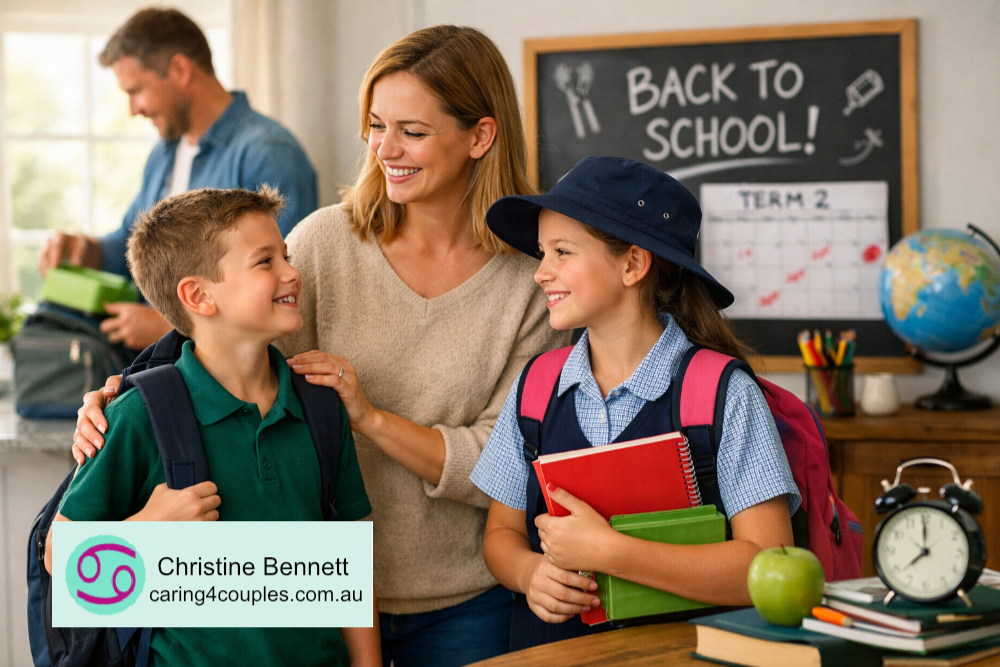
The Easter holidays always seem to fly by, don’t they? One minute you’re enjoying slower mornings and chocolate eggs, and the next you’re staring down lunchboxes, uniforms, and early alarms again. For Australian families, Term 2 can feel like a real reset point—and getting back into routine smoothly can make a huge difference for everyone’s well-being.

Here’s how to ease your family back into school life without the chaos.

Practical tips for Australian families to reset routines after the Easter school holidays, reduce stress, and help kids transition smoothly back to school.

1. Start the Routine Before School Actually Starts

One of the biggest mistakes families make is waiting until the night before school returns to reset everything. A gentler approach works far better.

A few days before school resumes:

  • Bring bedtime forward by 15–30 minutes each night
  • Start morning wake-ups closer to school time
  • Reintroduce structured meal times

This gradual shift helps avoid the shock of sudden early mornings (for both kids and adults).

2. Reset Sleep (Without the Battle)

Holiday sleep schedules can drift—later nights, slower mornings, maybe even screens creeping into bedtime.

To reset without arguments:

  • Dim lights earlier in the evening
  • Reduce screen time at least an hour before bed
  • Reintroduce calming routines like reading or quiet music

Consistency matters more than perfection here. Even small adjustments help the body clock realign.

3. Do a “Soft Launch” School Prep

Instead of cramming everything into Sunday night panic mode, spread preparation across a few days:

  • Check uniforms still fit (kids grow fast!)
  • Restock lunchbox essentials
  • Locate school hats, bags, and drink bottles
  • Review the school calendar for upcoming events

This avoids that stressful “Where is everything?” moment on the first morning back.

4. Get Kids Mentally Ready

Returning to school isn’t just logistical—it’s emotional too.

Some kids feel:

  • Excited to see friends
  • Nervous about new routines
  • Reluctant to leave holiday freedom

Have a casual chat:

  • Ask what they’re looking forward to
  • Talk through any worries
  • Remind them what they enjoy about school

Keeping it light and supportive helps them transition more confidently.

5. Simplify Week One (As Much As Possible)

The first week back doesn’t need to be perfect. In fact, trying to do too much can backfire.

Give yourself permission to:

  • Keep dinners simple
  • Say no to extra commitments
  • Focus on the basics: sleep, meals, getting out the door

Think of it as a “warm-up week,” not a full sprint.

6. Rebuild Healthy Habits

School terms naturally support structure—use this to your advantage.

Reintroduce:

  • Regular meal patterns
  • Balanced lunchboxes
  • After-school wind-down time
  • Outdoor play (even in cooler autumn weather)

Small habits rebuilt now will carry through the rest of the term.

7. Be Realistic (Especially With Yourself)

Transitions can be messy. There might be grumpy mornings, forgotten items, or tired afternoons—and that’s normal.

Instead of aiming for perfection:

  • Focus on consistency
  • Celebrate small wins
  • Adjust as you go

A calmer approach from parents often sets the tone for the whole household.

Final Thought

The return to school after Easter isn’t just about getting back to routine—it’s about setting the tone for the months ahead. A gradual, thoughtful reset can turn what feels like a stressful transition into a manageable—and even positive—shift for the whole family.

If you ease into it, rather than forcing it, everyone benefits.

For your convenience, appointments are available as follows:

ERINA, CENTRAL COAST NSW
 Location Information

CROWS NEST, SYDNEY NSW
 Location Information

ONLINE – SECURE MEETING ROOM
 More Information

Christine Bennett
Imago Relationship Therapist
Caring4Couples-Reconnecting Intimacy

#ImagoRelationshipTherapy #Caring4Couples #CouplesCounsellingErina
#CouplesCounsellingCrows Nest #CouplesCounsellingOnline

Please Share!

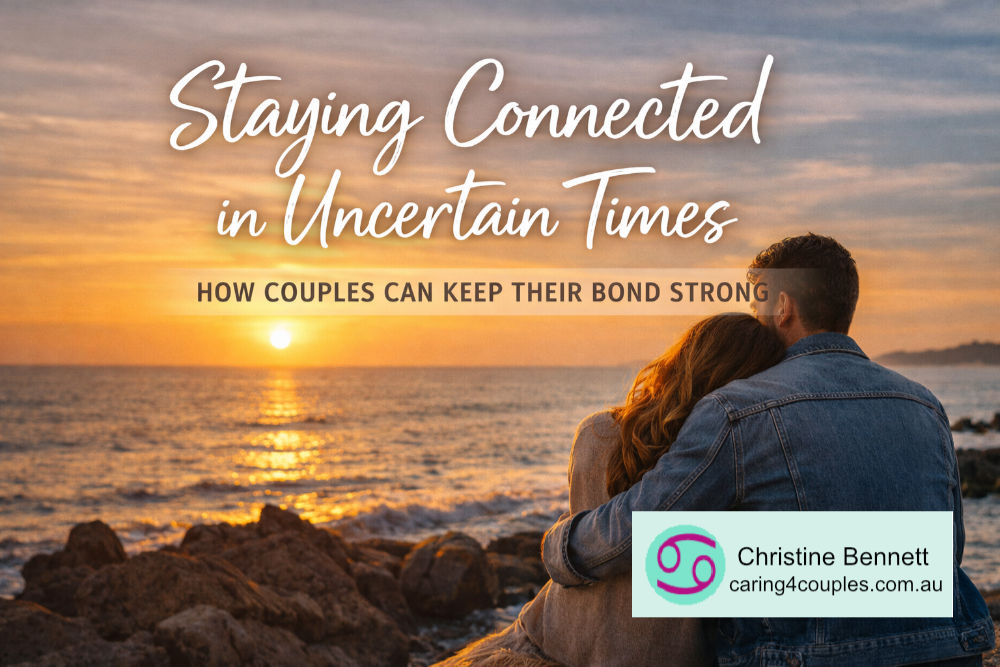
When the World Feels Uncertain: How Couples Can Stay Connected Instead of Drifting Apart.

It’s hard to ignore the tension in the air lately.

Rising living costs. Global conflicts. Constant news updates that seem to shift by the hour. Even if you’re not directly affected, the emotional weight of it all has a way of seeping into everyday life.

And for couples, this pressure often shows up quietly—through short tempers, emotional distance, or that subtle feeling of “we’re not quite on the same page anymore.”

If that sounds familiar, you’re not alone.

Stress Doesn’t Just Stay Personal — It Becomes Relational

When uncertainty increases, our nervous systems go on high alert. Some people become more anxious and seek reassurance. Others withdraw, needing space to cope.

Neither response is wrong—but together, they can create a painful cycle:

  • One partner reaches out
  • The other pulls away
  • Both feel misunderstood

Over time, this can look like communication breakdown… but underneath, it’s usually stress and fear.

The Real Risk: Emotional Disconnection

Many couples assume problems come from “poor communication.”

But more often, the issue is emotional disconnection.

You might still be talking about logistics—bills, kids, schedules—but missing the deeper conversations:

  • “How are you actually feeling about everything right now?”
  • “What’s been weighing on you lately?”
  • “Are you feeling supported by me?”

Without these check-ins, couples can start to feel like housemates rather than partners.

3 Simple Ways to Reconnect (Even When Life Feels Heavy)

You don’t need hours of deep conversation or a perfect relationship to reconnect. Small, consistent shifts make a big difference.

1. Name the Stress — Don’t Personalise It

Instead of:

“You’ve been distant lately.”

Try:

“I feel like stress is getting between us. Do you feel that too?”

This changes the dynamic from me vs you to us vs the problem.

2. Create a 10-Minute Daily Check-In

No phones. No fixing. Just listening.

Ask each other:

  • What was the hardest part of your day?
  • What helped you get through it?

This builds emotional safety without pressure.

3. Assume Good Intentions

Under stress, it’s easy to misread each other:

  • Silence becomes “they don’t care”
  • Irritability becomes “they’re against me”

Pause and ask:

“Could there be another explanation?”

This one shift can prevent unnecessary conflict.

You’re On the Same Team — Even If It Doesn’t Feel Like It

Stress has a way of making couples forget that they’re allies.

But the truth is, most couples aren’t breaking down because they don’t love each other.

They’re overwhelmed. Tired. Carrying more than they realise.

And often, they just don’t know how to find their way back to each other.

A Final Thought

In uncertain times, your relationship can either become another source of stress… or your greatest place of stability.

The difference isn’t perfection.

It’s willingness:

  • To pause
  • To listen
  • To turn toward each other, even when it’s hard

If things feel off in your relationship right now, it doesn’t mean something is broken.

It might just mean it’s time to reconnect.

For your convenience, appointments are available as follows:

ERINA, CENTRAL COAST NSW
Location information

CROWS NEST, SYDNEY NSW
Location information

NORTH WYONG, CENTRAL COAST NSW
Location information

#RelationshipStress #CostOfLiving #RelationshipCounselling #LoveAndConnection #CouplesCounsellingErina #Caring4Couples #ImagoRelationshipTherapy #MarriageCounselling

Christine Bennett
 Imago Relationship Therapist
 Caring4Couples-Reconnecting Intimacy

Please Share!

How Global Events Like the Iran War Can Increase Stress for Couples

Recent global tensions involving Iran have been widely reported in the news, and many people are becoming concerned about the potential economic consequences. Rising fuel prices, supply disruptions and the possibility of higher food costs are creating uncertainty for households across Australia.

While these events may seem far away geographically, global conflicts can still affect everyday life — and sometimes they place unexpected strain on relationships.

Rising global tensions and cost-of-living pressures can strain relationships. Learn how couples can manage stress and stay connected.

Why global events can affect relationships

When international conflict disrupts oil supply or shipping routes, it can lead to rising fuel prices and increased costs for transporting goods. Economists warn that disruptions linked to the current conflict could push petrol prices higher and increase the cost of food and everyday items.

For many couples, financial pressure is one of the most significant sources of relationship stress. When household budgets tighten, partners may feel anxious about the future, frustrated with rising expenses, or worried about providing for their family.

Even small financial worries can trigger arguments or misunderstandings if both partners are already feeling overwhelmed.

Stress can show up in unexpected ways

When couples are under stress, the tension often shows up indirectly. One partner may become withdrawn or quiet, while the other may become more critical or reactive. These patterns are common when people feel uncertain about the future.

Concerns about fuel shortages, food costs or the cost of living can create:

  • More frequent arguments about money
  • Increased anxiety or irritability
  • Difficulty communicating calmly
  • Different views about saving or spending
  • A sense of emotional distance

Often the real issue isn’t the money itself, but the stress and uncertainty surrounding it.

The cost-of-living pressure many couples are feeling

Australia has already experienced rising living costs in recent years. Global disruptions to energy supplies can add another layer of pressure. Some economists have warned that oil supply disruptions could significantly increase global fuel prices and contribute to inflation.

When couples are already juggling mortgages, rent, groceries and childcare costs, even a small increase in fuel or food prices can make things feel overwhelming.

This can create a cycle where stress leads to conflict, and conflict increases stress even further.

How couples can support each other during uncertain times

During periods of uncertainty, relationships often benefit from slowing down and reconnecting rather than reacting.

A few helpful approaches include:

Talk openly about concerns
Instead of bottling up worries about money or the future, sharing concerns calmly can reduce misunderstandings.

Focus on teamwork
Remind yourselves that you’re facing challenges together, not against each other.

Avoid blame during stressful moments
Financial pressure can easily turn into blame, even when neither partner is responsible for the situation.

Make practical plans together
Sometimes simply making a budget or discussing priorities can reduce anxiety.

When outside support can help

If stress is beginning to affect communication or connection in a relationship, speaking with a counsellor can help couples step out of reactive patterns and reconnect.

Relationship counselling provides a neutral space where both partners can feel heard and supported while learning practical tools to improve communication and reduce conflict.

If you and your partner are feeling the strain of financial pressure, uncertainty or ongoing conflict, counselling can help you move from frustration toward understanding and connection.

For your convenience, appointments are available as follows:

ERINA, CENTRAL COAST NSW
Location information

CROWS NEST, SYDNEY NSW
Location information

NORTH WYONG, CENTRAL COAST NSW
Location information

#RelationshipStress #CostOfLiving #RelationshipCounselling #LoveAndConnection #CouplesCounselling #Caring4Couples #ImagoRelationshipTherapy #MarriageCounselling

Christine Bennett
 Imago Relationship Therapist
 Caring4Couples-Reconnecting Intimacy

Please Share!

Planning for Connection: Nurturing Your Relationship in the Modern World

In the whirlwind of modern life, where calendars are crammed and digital distractions abound, it’s easy for couples to feel a disconnect, even when sharing the same space. The demands of careers, family, and personal pursuits can leave little room for intentional connection, leading to a sense of drifting apart.

But what if we approached our relationships with the same foresight and planning we apply to our finances or careers? Just as a garden needs consistent care to flourish, so too does a partnership. For today’s couples, cultivating a strong and lasting bond requires proactive effort. It’s about creating dedicated spaces and times where you can truly see, hear, and appreciate each other.

1. Schedule “Us” Time (and Protect It!)

In our busy lives, if it’s not on the calendar, it often doesn’t happen. Treat your relationship time with the same importance as a professional commitment.

  • Date Nights: Whether it’s a fancy dinner out or a cozy movie night in, schedule regular date nights. Alternate who plans it to keep things fresh.
  • Micro-Moments: Don’t underestimate the power of small, consistent connections—a 15-minute coffee chat in the morning or putting phones away before bed.
  • Weekend Rituals: Establish a fun weekend ritual, like a Sunday morning hike or visiting a local market together.

2. Communicate with Intention

Effective communication is more than just talking; it’s about truly listening and understanding.

  • Regular Check-ins: Schedule dedicated times to “check in.” Discuss how you’re feeling, challenges you’re facing, or successes you’re celebrating.
  • Active Listening: When your partner is speaking, put away distractions. Make eye contact and listen to understand rather than just to respond.
  • Future Planning: Discuss your shared goals—from travel dreams to financial objectives. Aligning on these visions creates a powerful sense of shared purpose.

3. Create “Connection Rituals”

Planning isn’t just about logistics; it’s about creating a culture of appreciation. Rituals are the “glue” for your relationship.

  • The 20-Second Hug: Research suggests a 20-second hug releases oxytocin. Make it a ritual to hug when you first see each other after a long day.
  • The “High-Low” Dinner: Share the best part of your day (the high) and the most challenging part (the low) to stay updated on each other’s internal worlds.
  • A “Relationship Bucket List”: Once a quarter, plan one new thing to try together—a cooking class, a new hiking trail, or a weekend getaway.

A Personal Note

In my years working with couples across Sydney and the Central Coast, I’ve seen one consistent truth: The strongest relationships aren’t the ones without challenges; they are the ones where both partners decide to be “co-architects” of their shared life.

Planning for connection isn’t about adding another chore to your to-do list. It’s about creating a “safe harbour” where you can both exhale. Whether it’s that morning walk with the dog or a deeper conversation over coffee, these moments are the insurance policy for your relationship’s future.

If you find that the “plan” feels out of reach, or if the disconnect feels too wide to bridge alone, remember that reaching out for support is a sign of strength, not a failure of your partnership.

Let’s build that connection together.

Ready to move from “co-existing” to “truly connecting”? I offer a non-judgemental space to help you and your partner navigate the complexities of modern love.

For your convenience, appointments are available as follows:

ERINA, CENTRAL COAST NSW
Location information

CROWS NEST, SYDNEY NSW
Location information

NORTH WYONG, CENTRAL COAST NSW
Location information

#CoupleGoals #RelationshipAdvice #ModernLove #RelationshipTips #LoveAndConnection #DateNightIdeas #Caring4Couples #ImagoRelationshipTherapy #CouplesCounseling

Christine Bennett
 Imago Relationship Therapist
 Caring4Couples-Reconnecting Intimacy

Please Share!

Navigating Your Partner’s Communication Styles

Understanding and Adapting to your Partner’s Unique Way of Expressing Themselves

Effective communication is often cited as one of the cornerstones of a healthy relationship. Yet, many couples find themselves struggling to connect, not because they don’t care for each other, but because they communicate in different styles. Understanding and adapting to your partner’s unique way of expressing themselves can significantly enhance your relationship. In this blog, we’ll explore various communication styles, the impact they have on relationships, and practical strategies for improving communication.

Understanding communication styles in relationships.

Understanding Communication Styles

Communication styles can generally be categorized into four main types:

1. Assertive: Assertive communicators express their thoughts and feelings openly and respectfully. They are confident in their communication and encourage dialogue.

2. Passive: Passive communicators tend to avoid expressing their feelings or opinions, often to maintain peace. This can lead to feelings of resentment over time.

3. Aggressive: Aggressive communicators express their feelings in a forceful manner, often disregarding the feelings of others. This style can create conflict and tension in relationships.

4. Passive-Aggressive: This style combines elements of passive and aggressive communication. Individuals may express their anger indirectly, often through sarcasm or subtle digs, which can lead to confusion and frustration.

Recognizing your own communication style, as well as your partner’s, is the first step in improving your interactions.

The Impact of Different Communication Styles

When partners have differing communication styles, it can lead to misunderstandings and conflict. For example, a passive communicator may feel overwhelmed by an aggressive partner’s directness and may withdraw, leading to a breakdown in communication. Conversely, an assertive partner may feel frustrated when their passive partner avoids discussing important issues.

Understanding these dynamics is crucial. It allows both partners to see that their styles are not inherently wrong; they are simply different. This awareness can foster empathy and patience, which are essential for effective communication.

Strategies for Improving Communication

1. Identify Your Styles: Take time to reflect on your own communication style and discuss it with your partner. Understanding each other’s tendencies can help you navigate conversations more effectively.

2. Practice Active Listening: Make a conscious effort to truly listen to your partner. This means not just hearing their words but also understanding the emotions behind them. Reflect back what you hear to ensure clarity.

3. Use “I” Statements: When discussing feelings or concerns, frame your statements using “I” rather than “you.” For example, say “I feel overlooked when decisions are made without my input” instead of “You never include me in decisions.” This helps reduce defensiveness.

4. Set Aside Time for Open Dialogue: Schedule regular check-ins where both partners can share their thoughts and feelings in a safe space. This encourages open communication and can help prevent issues from escalating.

5. Be Patient and Flexible: Adapting to a partner’s communication style takes time. Be patient with each other and be willing to adjust your approach as needed.

6. Seek Professional Help: If communication issues persist, consider seeking the guidance of a couple’s therapist. A professional can provide tools and strategies tailored to your unique situation.

Conclusion

Navigating different communication styles is a common challenge in relationships, but it is also an opportunity for growth and deeper connection. By understanding and adapting to your partner’s way of expressing themselves, you can foster a more empathetic and supportive relationship. Remember, effective communication is a skill that takes practice, patience, and commitment. Embrace the journey together, and you may find that your relationship becomes stronger and more fulfilling as a result.

#CouplesTherapy #CommunicationStyles #HealthyRelationships #ActiveListening  #MarriageCounselling #RelationshipGoals #ConflictResolution #EmpathyInRelationships #RelationshipGrowth #CouplesCommunication

Please Share!