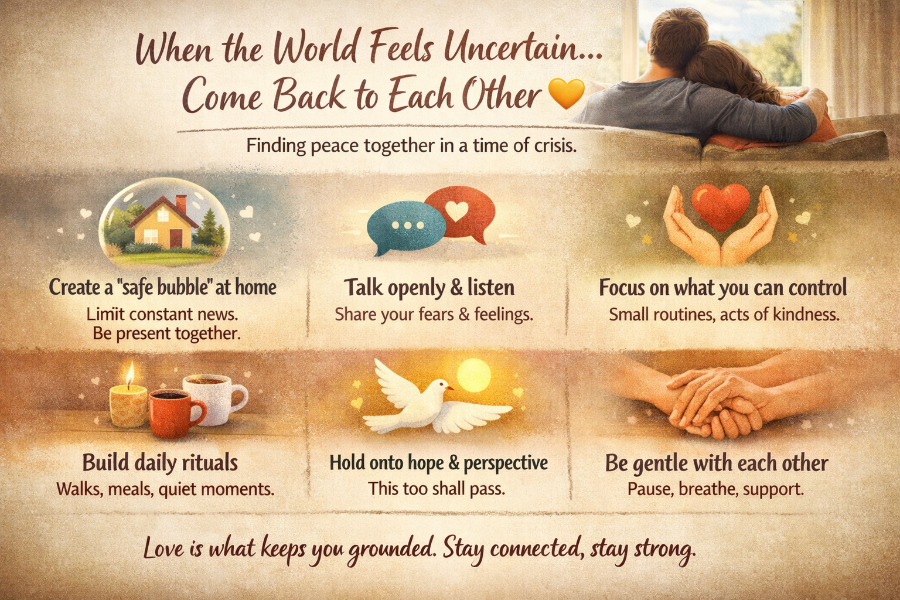
What Couples Are Navigating in 2026: Real Issues, Real Talk

Relationships have always been a mix of joy and challenge, but the landscape in 2026 brings new stressors and fresh opportunities for connection. Whether you’ve been together for years or just started dating, the world we live in is shaping how we love, communicate, and plan for the future.

1. Navigating Digital Life Together

Technology is now the backdrop of nearly every relationship.

  • Social media pressure: Curated highlights vs. real life can create comparison anxiety — especially around milestones like anniversaries, vacations, or home ownership.
  • Boundaries with screens: Couples are learning that it’s not just about how much time you spend on your phone, but when. Meal times, bedtime scrolling, and morning routines are all common battlegrounds.
  • Dating apps after commitment: Some partners still use apps “for fun” or networking — and that can spark insecurity if boundaries aren’t clear.

Tip: Set tech norms early — e.g., phone-free dinners, agreed boundaries for social platforms, and transparency instead of secrecy.


Relationships have always been a mix of joy and challenge, but the landscape in 2026 brings new stressors and fresh opportunities for connection.
Couples Counselling North Wyong, Erina and Crows Nest.

2. Money Talks That Matter

Finances remain a top stressor for couples — but the conversation is evolving.

  • Cost of living pressures: With inflation and housing costs high in many parts of the world, priorities like saving vs. spending can cause tension.
  • Financial transparency: Hidden accounts or undisclosed spending erode trust fast.
  • Shared vs. separate finances: Many couples are rejecting the old “yours/mine/ours” model and creating hybrid approaches that respect individuality and shared goals.

Tip: Schedule quarterly money check-ins — not to police each other, but to align goals like travel, home upgrades, or retirement planning.


3. Mental Health as Relationship Health

Post-pandemic awareness of mental health is now a core part of healthy partnerships.

  • Normalize support: Encouraging therapy — individually and as a couple — is no longer taboo.
  • Stress spillover: Career stress, burnout, and anxiety can show up in how partners communicate or withdraw.
  • Empathy over judgment: Recognizing emotional needs as valid — even when they differ — builds resilience.

Tip: Practice “check-in conversations” — brief, scheduled moments to share how you’re actually feeling, no problem-solving required.


4. Evolving Gender Roles and Expectations

Traditional roles are shifting — and that’s exciting and confusing for some.

  • Household labor negotiation: Couples are rebalancing chores not by gender but by energy, schedules, and strengths.
  • Career ambitions: Supporting each other through job changes, relocations, or education can be both a bonding experience and a stressor.
  • Parental roles: Co-parenting norms are breaking old molds, and communication about expectations is essential.

Tip: Revisit roles every few months — what worked last quarter might feel outdated now.


5. Intimacy Beyond the Bedroom

Sexual connection matters, but so does everyday intimacy — the tiny moments of closeness that add up.

  • Physical affection vs. sex frequency: They’re not always synonymous. Holding hands or sharing a look can matter just as much as sex.
  • Desire discrepancies: It’s normal for libido to fluctuate, but avoiding the topic creates distance.
  • Emotional intimacy: Trust, vulnerability, and shared experiences fuel a deeper bond.

Tip: Ask questions like “What made you feel loved this week?” instead of benchmarking against past patterns or others’ relationships.


6. Planning for the Future — Together

Couples often struggle not with whether to plan, but how.

  • Big decisions loom: Marriage, kids, relocation, career pivots — each brings excitement and fear.
  • Goal alignment: It’s healthy to have different dreams — but sharing them openly avoids assumptions.
  • Flexibility is key: Life rarely goes according to plan, and adaptability strengthens teams.

Tip: Create a shared vision board or document — it can be lighthearted and aspirational rather than rigid.


Final Thought

Love isn’t static — it evolves with the world and with us. In 2026, healthy relationships are less about perfection and more about awareness, communication, and mutual growth.

Couples who thrive aren’t conflict-free — they’re curious, compassionate, and committed to becoming better partners every day.

For your convenience, appointments are available as follows:

ERINA, CENTRAL COAST NSW
Location information

CROWS NEST, SYDNEY NSW
Location information

NORTH WYONG, CENTRAL COAST NSW
Location information

#RelationshipAdvice #CouplesGoals #RelationshipReset #FreshStart2026

Christine Bennett
 Imago Relationship Therapist
 Caring4Couples-Reconnecting Intimacy

Please Share!

Navigating the Post-Holiday Relationship Reset

The holiday season is behind us, and for many couples, the first weeks of the new year can bring a mix of reflection, stress, and a desire for change. The excitement of Christmas and New Year’s celebrations often gives way to routine, unresolved tensions, and the reality of daily life.

Start 2026 strong with a post-holiday relationship reset. Learn practical tips for couples to communicate better, set realistic goals, and strengthen their connection after the holidays.

January can be a pivotal month for couples. Some may feel the pressure of New Year’s resolutions—whether around health, finances, or family plans—while others notice strains that were easier to overlook during the festive season. It’s a common time for small disagreements to surface, old patterns to re-emerge, or communication to falter.

Here are three ways to navigate this transition smoothly:

1. Pause and Reflect Together
 
Take time to talk about what worked and what didn’t over the holidays. Sharing feelings openly—without blame—helps both partners understand each other’s perspectives and needs.

2. Set Realistic Goals
 
New Year’s resolutions are more likely to succeed if they are specific, shared, and flexible. Whether it’s planning more quality time, improving finances, or parenting strategies, focus on achievable steps together.

3. Seek Support Early
 
If tensions persist, don’t wait for conflicts to escalate. Professional couples counselling or family mediation can help reset communication patterns before they become entrenched. Early support can prevent small issues from growing into larger problems.

The post-holiday period doesn’t have to be stressful. With intentional reflection, honest communication, and a willingness to seek support, couples can start the year stronger, more connected, and better prepared for life’s challenges together.

For your convenience, appointments are available as follows:

ERINA, CENTRAL COAST NSW
Location information

CROWS NEST, SYDNEY NSW
Location information

NORTH WYONG, CENTRAL COAST NSW
Location information

#RelationshipAdvice #CouplesGoals #RelationshipReset #FreshStart2026

Christine Bennett
 Imago Relationship Therapist
 Caring4Couples-Reconnecting Intimacy

Please Share!

Communication Habits That Make Relationships Stronger

Every couple communicates differently, but some habits consistently help relationships feel calmer, more respectful and more connected. Small changes create a big difference — and many are surprisingly simple.

Every couple communicates differently, but some habits consistently help relationships feel calmer, more respectful and more connected.

Here are five communication habits that can strengthen connection at home:

1. Listening to understand, not to win

Many conversations become arguments when partners listen only to reply.
Stronger communication begins when both people aim to understand before responding.

A helpful phrase:

  • “Let me make sure I understood you correctly…”

Feeling heard reduces frustration and brings conversations back to calm.

2. Speaking from “I”, not “You”

“You always…” or “You never…” usually leads to defensiveness.
Instead, “I feel… when…” keeps the tone softer and makes it easier to talk.

Examples:

  • Instead of: “You don’t care about what I need.”
    Try: “I feel unimportant when plans change without checking in.”

It focuses on the issue, not blame.

3. Taking short breaks when conversations heat up

Sometimes the brain is too overwhelmed to communicate well.
A short pause — a walk, breathing, or five minutes of space — helps partners return calmer and clearer.

A respectful way to pause:

  • “I want to talk about this, but I’m getting too upset. Can we take a break and come back in 10 minutes?”

Breaks prevent words that are hard to take back.

4. Checking assumptions instead of guessing

It’s easy to assume what your partner meant — but assumptions can create unnecessary conflict.

Try asking:

  • “Is this what you were trying to say?”
  • “Can you clarify what you meant?”

Clarity reduces misunderstanding.

5. Expressing appreciation regularly

Most couples communicate more about problems than positives — but appreciation strengthens connection.

Small daily habits matter:

  • thank-you
  • noticing effort
  • acknowledging kindness
  • recognising when your partner is trying

Gratitude changes the atmosphere of a relationship.

Healthy communication is a skill — not a talent

No couple gets it perfect.
But with small steps, conversations feel easier, safer and more respectful.

If you and your partner would like support with improving communication or understanding each other better, Caring4Couples offers individual and couple sessions in-person and online, plus a complimentary 20-minute consultation for new clients.

Better communication creates better connection — one conversation at a time.

#BetterCommunication #CouplesCounsellingErina #RelationshipCounsellingCrowsNest

Christine Bennett
Imago Relationship Therapist
Caring4Couples-Reconnecting Intimacy

Please Share!

How to Stay Connected over Christmas

Christmas is fast approaching! The countdown is on and for many couples, Christmas can be a mix of celebration, pressure, and exhaustion. This time of year promises joy—family gatherings, familiar traditions, time off work—but the reality often includes financial strain, family tension, travel logistics, high expectations, disrupted routines, and emotional overload.

Even strong, loving couples may find themselves more irritable, disconnected, or overwhelmed during December. The good news? With a little awareness and planning, couples can turn Christmas stress into an opportunity to strengthen—not strain—the relationship.

How to stay connected over Christmas - Couples Counselling Crows Nest and Erina NSW

Here are the issues couples most commonly face this time of year, and what can help prevent holiday stress from becoming holiday conflict.

1. Emotional Overload & Exhaustion

People are tired by the end of a year. Work deadlines, school functions, social events, and Christmas planning create mental load—usually carried unevenly. One partner might feel responsible for gifts, food, family arrangements, or decorating, while the other doesn’t realise just how much is being done behind the scenes.

# Stress Prevention Tip:
Have a “holiday responsibilities” conversation. Sit down with a cup of tea and list what needs doing. Instead of one person silently carrying the load, divide tasks in a way that feels fair. Sometimes the healthiest choice is to simplify: fewer events, fewer expectations, more rest.

2. Money & Gift Pressure

Christmas is expensive. Gifts, food, travel, social outings, and family commitments can lead to financial stress—and financial stress is one of the biggest triggers for arguments.

# Stress Prevention Tip:
Agree on a spending plan before December hits. Find a number both of you feel comfortable with. Many couples feel relieved when they realise they can prioritise meaning over money: handmade, practical, or experience-based gifts can be more heartfelt and less stressful than expensive ones.

3. Family Tension

Visiting relatives—or hosting them—can bring up old patterns, unresolved issues, or emotional triggers. Couples may feel pressure to “keep the peace,” especially if one partner’s family is more dominant, critical, or demanding.

# Stress Prevention Tip:
Talk privately beforehand about boundaries:

  • How long to stay
  • When to leave
  • What behaviour is (and isn’t) acceptable
  • How you’ll support each other if tension rises

Sometimes the healthiest choice is shorter visits, separate events, or celebrating differently this year.

4. Different Expectations About Christmas

One partner may love big gatherings, decorations, and tradition. The other might long for quiet, rest, and a simpler season. Neither is wrong—but without communication, hurt feelings build quickly.

# Stress Prevention Tip:
Ask each other:

  • “What matters most to you about Christmas?”
  • “What would make this season enjoyable, not stressful?”
  • “Is there anything you’d like less of this year?”

Often, just being heard brings relief. You can create a version of Christmas that works for both of you—not what everyone else expects.

5. Lack of Couple Time

Busy schedules mean couples stop connecting. There’s plenty of doing, but not much being together. This makes people more reactive and less patient.

# Stress Prevention Tip:
Schedule small moments of calm:

  • A walk after dinner
  • Watching a holiday movie together
  • Saying no to one event to have a quiet night in
  • A slow morning coffee with no phones

Protecting connection is more important than having a picture-perfect holiday.

6. Loss, Loneliness, & Grief

Christmas can highlight who’s missing or which relationships have changed. Many people carry sadness alongside celebration. If one partner is grieving and the other is in “festive mode,” misunderstanding can arise.

# Stress Prevention Tip:
Name the feelings. Offer space for emotions. It’s possible to honour grief and still experience joy—both can coexist.

How to Keep the Relationship a priority

The best Christmases aren’t the most decorated or over-organised—they’re the ones where couples feel like a team.

A helpful anchor question is:
“How can we support each other and stay connected this season?”

Not everything has to be perfect. Not every tradition must be upheld. But kindness, communication, and partnership make December a lot gentler.

If stress, conflict, or communication challenges are already building, counselling can help couples reset and create a healthier path forward. Many couples find that a single session at this time of year offers clarity, calm, and new tools to navigate a busy season with more ease.

#HealthyRelationships #ImagoRelationshipTherapy #ChristmasStress #RelationshipHelp

Christine Bennett
Imago Relationship Therapist
Caring4Couples-Reconnecting Intimacy

Please Share!

What Matters Most for Couples Today: Reconnection in a Disconnected World

In today’s world, couples face more distractions, pressures, and emotional noise than ever before. While we’re more digitally connected, many couples tell me they feel emotionally distant. They love each other, but something’s missing.

Reconnect with your partner in a disconnected world

So what matters most for couples today?

  • Reconnection.
  • Not just talking—but truly listening.
  • Not just sharing space—but sharing presence.
  • Not just resolving problems—but healing together.

Here’s what I see in my work with couples every week—and what helps partners reconnect and grow stronger, even when life gets busy or overwhelming:

1. Digital Overload, Emotional Underwhelm

Smartphones, social media, and endless notifications often replace real conversations. It’s easy to sit next to someone you love and still feel far away.

Try this: Set aside 15–30 minutes each day just for each other. No screens, no multitasking—just eye contact, curiosity, and the simple question: “How are you, really?”

2. Invisible Labour, Uneven Load

Many couples today are struggling with the unspoken burden of mental load—keeping track of schedules, worries, and to-dos. One partner may feel overwhelmed and alone in the “thinking” work.

Try this: Talk honestly about emotional and mental responsibilities. Sharing the load isn’t just practical—it builds trust and connection.

3. Emotional Safety Over Perfection

Couples often worry about saying the “right thing” or avoiding conflict. But true intimacy isn’t about perfection—it’s about safety.

Try this: Slow down and really listen. In Imago Relationship Therapy, we use structured dialogue to help each partner feel truly heard and validated. Even difficult conversations can become moments of healing.

4. Purposeful Time Together

In the rush of life, it’s easy to drift into “parallel living”—functioning well as a team, but losing emotional closeness.

Try this: Schedule time just for you as a couple. A weekly walk, a quiet meal, or a simple check-in can keep your relationship nourished.

5. Healing, Not Blaming

Old wounds often resurface in close relationships. Many couples don’t realise that conflict is an invitation—not to fight harder, but to understand more deeply.

Try this: Instead of “Why are you doing this to me?” try “What does this bring up for you?” Imago helps couples uncover the childhood patterns that shape adult reactions—so you can stop the cycle and start connecting.

6. Resilience Through Uncertainty

From global stress to personal challenges, couples today face a lot. But those who lean toward each other instead of away can come out stronger.

Try this: Share your fears, not just your plans. Let your partner see your vulnerability. That’s where true partnership begins.

You Don’t Have to Do It Alone

If your relationship is feeling strained, disconnected, or stuck in old patterns—please know: you’re not failing. You’re human. And help is available.

At Caring4Couples, I offer a safe space to explore what’s not working—and rediscover what can. Through Imago Relationship Therapy, we’ll work together to turn conflict into connection and rebuild the intimacy you long for.

Let’s start with a complimentary 20-minute phone consultation
* Request a time today!

Christine Bennett
Imago Relationship Therapist
Caring4Couples – Supporting Connection That Lasts

#CouplesTherapy #RelationshipSupport #ImagoTherapy #Caring4Couples #MarriageCounselling #EmotionalConnection #HealthyRelationships #CouplesCommunication #RelationshipHealing

Please Share!

How to Rebuild Trust After a Betrayal: A Guide for Couples

Rebuilding trust after betrayal is essential to enable reconnection and healing. Even though it is likely to be challenging, trust is the foundation of any strong relationship, and when it is broken, it can sometimes feel impossible to rebuild. Whether caused by infidelity, dishonesty, or unmet expectations, betrayal can leave couples feeling lost and disconnected. However, with commitment, patience, and professional support, restoring trust is possible. In this blog, we explore effective steps to help couples navigate the healing process and reconnect.

Rebuilding trust after betrayal

Understanding the Impact of Betrayal

Betrayal in a relationship often leads to emotional distress, anxiety, and insecurity. The injured partner may struggle with feelings of anger, sadness, and doubt, while the partner responsible for the betrayal may experience guilt, shame, or defensiveness. Recognising the emotional toll on both individuals is crucial for moving forward and is an important part of rebuilding trust after betrayal.

Steps to Rebuilding Trust After Betrayal

1. Open and Honest Communication

Effective communication is the first step in rebuilding trust. The partner who caused the hurt must be willing to take responsibility, answer difficult questions honestly, and reassure their partner with transparency.

2. Seek Professional Support

Engaging in couples therapy can provide guidance and structure during the healing process. A skilled therapist helps couples explore underlying issues, improve communication, and establish trust-building strategies.

3. Set Clear Boundaries and Expectations

Both partners should discuss what they need moving forward. This includes setting healthy boundaries, defining expectations for the relationship, and agreeing on steps to prevent future betrayals.

4. Practice Patience and Consistency

Trust is not rebuilt overnight. The partner who was hurt may need time to process emotions and observe consistent, trustworthy behaviour over time. Small, daily efforts—such as keeping promises, being emotionally present, and showing respect—can make a significant difference.

5. Work on Forgiveness and Healing

While forgiving does not mean forgetting, it allows both partners to move forward without resentment. Seeking individual counselling alongside couples therapy can be beneficial for addressing personal pain and developing self-awareness.

Why Choose Couples Therapy?

For couples struggling to rebuild trust, professional therapy offers a safe space to navigate challenges. At Caring4Couples, we specialise in helping partners restore emotional connection and strengthen their relationships. Our online marriage counselling is also available for those who prefer flexibility and convenience.

Final Thoughts

Rebuilding trust after betrayal is a challenging but achievable journey. Through open communication, professional guidance, and patience, couples can emerge stronger and more connected than before. If you and your partner are facing trust issues, consider seeking couples therapy on the Central Coast, North Sydney or online for expert support.

For more information or to book a session, call Caring4Couples today and take the first step towards healing.

Appointments are easy to book using convenient Instant Booking App.

#CouplesTherapy #MarriageCounselling #RebuildTrust #CouplesTherapyCentralCoast
#ImagoSydney #RelationshipSupport


Please Share!

Navigating Relationship Challenges: A Guide for Couples

In the ever-evolving landscape of modern relationships, couples face a myriad of challenges that can strain even the strongest bonds. From the pressures of work-life balance to the complexities of digital communication, today’s couples must navigate a unique set of obstacles. However, understanding these issues and adopting healthy strategies can pave the way for a more harmonious and fulfilling partnership. In this blog post, we will explore some common relationship difficulties and offer practical advice on how to handle them better.

Navigating Relationship Challenges

1. Communication Breakdown

ISSUE: One of the most prevalent issues in relationships is poor communication. Misunderstandings, assumptions, and unspoken expectations can lead to frustration and resentment.

SOLUTION: Effective communication is the cornerstone of a healthy relationship. Here are some tips to improve it:

  • Active Listening: Truly listen to your partner without interrupting. Show empathy and validate their feelings.
  • Clear Expression: Clearly articulate your thoughts and feelings. Use “I” statements to express how you feel without blaming your partner.
  • Regular Check-ins: Schedule regular times to discuss your relationship, share concerns, and celebrate successes.

2. Balancing Work and Personal Life

ISSUE: The demands of work can often encroach on personal time, leading to stress and neglect of the relationship.

SOLUTION: Striking a balance between work and personal life requires intentional effort:

  • Set Boundaries: Establish clear boundaries between work and personal time. Avoid bringing work-related stress into your home life.
  • Quality Time: Prioritize quality time with your partner. Engage in activities you both enjoy and make time for each other regularly.
  • Support Each Other: Be supportive of each other’s career goals and challenges. Offer encouragement and understanding.

3. Financial Stress

ISSUE: Financial difficulties are a significant source of tension in many relationships. Disagreements about spending, saving, and financial priorities can lead to conflict.

SOLUTION: Addressing financial stress requires open dialogue and cooperation:

  • Budget Together: Create a budget together that reflects both partners’ financial goals and priorities.
  • Transparent Communication: Be transparent about your financial situation and discuss any concerns openly.
  • Seek Professional Help: If necessary, consult a financial advisor to help manage your finances and create a plan.
Digital distractions impact intimacy

4. Digital Distractions

ISSUE: The pervasive presence of digital devices can lead to distractions and decreased quality time together.

SOLUTION: Managing digital distractions

Managing digital distractions requires mindful effort and intentional practices:

  • Set Digital Boundaries: Establish specific times when devices are off-limits, such as during meals or before bedtime. This will help ensure that you have uninterrupted quality time together.
  • Create Tech-Free Zones: Designate certain areas of your home, such as the dining room or bedroom, as tech-free zones to encourage more face-to-face interaction.
  • Be Present: Make a conscious effort to be present when you are with your partner. Put away your phone, make eye contact, and engage in meaningful conversations.
  • Scheduled Disconnect: Plan regular periods where both of you disconnect from devices and engage in activities that foster connection, such as going for a walk, cooking together, or playing a game.
Repair intimacy issues with effective communication.

5. Intimacy Issues

ISSUE: Over time, couples may experience a decline in physical and emotional intimacy, which can lead to feelings of disconnection.

SOLUTION: Reignite intimacy through intentional actions and open communication:

  • Prioritize Intimacy: Make intimacy a priority in your relationship. Schedule regular date nights and create opportunities for physical closeness.
  • Communicate Needs: Discuss your needs and desires openly with your partner. Understanding each other’s preferences can help you reconnect on a deeper level.
  • Explore New Activities: Try new activities together that can bring excitement and novelty into your relationship, whether it’s a new hobby, travel, or exploring new ways to be intimate.

6. Handling Conflict

ISSUE: Conflicts are inevitable in any relationship, but how they are handled can significantly impact the relationship’s health.

SOLUTION: Develop healthy conflict resolution skills to navigate disagreements constructively:

  • Stay Calm: Approach conflicts with a calm and composed demeanour. Take a break if emotions run high and return to the discussion when both parties are calmer.
  • Focus on the Issue: Address the specific issue at hand rather than bringing up past grievances. Stay focused on finding a resolution.
  • Compromise: Be willing to compromise and find a middle ground that satisfies both partners. Remember that the goal is to resolve the conflict, not to “win” the argument.

7. Maintaining Individuality

ISSUE: Couples may struggle with maintaining their individuality while being part of a partnership, leading to feelings of suffocation or loss of identity.

SOLUTION: Encourage each other to pursue individual interests and personal growth:

  • Support Personal Goals: Encourage your partner to pursue their hobbies, interests, and personal goals. Celebrate their achievements and provide the space they need to grow individually.
  • Maintain Friendships: Sustain your own friendships and social networks outside of the relationship. Having a support system and social life independent of your partner is healthy and enriching.
  • Self-Care: Prioritize self-care and personal well-being. When each partner feels fulfilled and balanced individually, they can contribute more positively to the relationship.

8. Dealing with External Pressures

ISSUE: External pressures from family, friends, or societal expectations can create stress and conflict within a relationship.

SOLUTION: Build a united front and manage external influences together:

  • Unified Decisions: Make decisions as a team and present a united front to others. This reinforces your partnership and reduces the impact of external pressures.
  • Set Boundaries: Establish clear boundaries with family and friends. Communicate your needs and expectations to prevent undue interference in your relationship.
  • Focus on Your Values: Stay true to your shared values and priorities as a couple. External opinions matter less when you are aligned and confident in your choices.

In Summary

Every relationship faces challenges, but with understanding, effort, and effective strategies, couples can navigate these difficulties and emerge stronger. Remember that no relationship is perfect, and it’s normal to experience ups and downs. The key is to approach each challenge as a team, with empathy, patience, and a commitment to growth.

By prioritizing communication, balancing work and personal life, managing finances, minimizing digital distractions, reigniting intimacy, handling conflicts constructively, maintaining individuality, and dealing with external pressures, couples can build a resilient and fulfilling partnership.

Investing time and energy into these areas not only strengthens your relationship but also fosters a deeper connection and lasting happiness. So, embrace the journey together and remember that every challenge is an opportunity to grow closer and build a more loving and supportive relationship.

Thank you for reading! If you have any thoughts or additional tips on navigating relationship challenges, feel free to share them in the comments below. Let’s support each other in building stronger, healthier relationships.

#relationship challenges, #communication, #boundaries, #couples therapy, #intimacy issues, #financial stress, #self care, #conflict resolution

Please Share!

Habitual Relationship Conflict

Effective Strategies for Couples

Habitual relationship conflicts are inevitable in any partnership, but constantly encountering the same issues can leave both individuals feeling drained and unsatisfied. Learning how to overcome habitual relationship conflict can significantly improve the health of one’s relationship and personal wellbeing. This article aims to provide strategies and guidance on how to break the cycle of recurring issues and foster healthier communication patterns within romantic partnerships.

Habitual relationship conflict: Effective strategies for couples

It’s important to begin by identifying the root causes of recurring relationship conflicts. These may stem from differing communication styles, clashing values, or past experiences. By understanding and acknowledging the underlying issues, couples can better address the conflicts that arise and work towards resolving them in a more productive manner.

Once the source of conflict is identified, both partners can take the necessary steps to develop healthier ways of dealing with disagreements. This involves cultivating empathy, improving communication skills, and learning to compromise. By consciously making an effort to strengthen these aspects, couples can effectively break the habit of repetitive relationship conflict and create a more harmonious, respectful, and fulfilling bond.

Habitual Relationship Conflict – Understanding Contributing Factors

  • Unmet Expectations: People might enter relationships with preconceived ideas about their partner’s roles and responsibilities, leading to disappointment when these expectations aren’t met. By communicating openly about individual expectations and finding ways to compromise, couples can work together to resolve the conflict.
  • Jealousy: Jealousy can surface when one partner feels threatened or insecure due to the attention their partner receives from others. To tackle jealousy-related conflicts, both parties need to build trust and openly discuss their insecurities. Reassuring each other of their commitment and addressing insecurities can alleviate jealousy conflicts.
  • Resentment: Resentment often emerges when unresolved issues from the past continue to affect the present dynamics between a couple. Addressing the underlying emotions and resolving past conflicts can help to minimise resentment and promote harmony within the relationship.
  • Mental Health: Mental health can significantly impact the frequency of relationship conflicts. When one or both partners struggle with mental health issues, it might become challenging to manage emotions effectively. Understanding the importance of mental well-being, seeking professional help, and providing support to each other can contribute to a healthy relationship environment.

The Role of Effective Communication

One of the primary factors that contribute to habitual relationship conflict is poor communication. Communication issues can manifest in various ways, such as yelling, interrupting, or not expressing one’s emotions clearly. To overcome these issues, it is essential to establish clear and open lines of communication. This can be achieved by setting aside dedicated time for discussing concerns, using “I” statements to express emotions, and avoiding blame or criticism.

Some strategies to improve communication include:

  • Practicing empathy: Put oneself in the other person’s shoes to understand their perspective.
  • Establishing boundaries: Clearly communicate individual limits and expectations.
  • Willingness to compromise: Finding common ground can lead to more effective conflict resolution.

Active Listening Strategies

Active listening plays a vital role in resolving conflicts and nurturing strong relationships. It is the practice of fully focusing on the person speaking, providing verbal and non-verbal feedback, and paraphrasing what they have said to confirm understanding.

Here are some active listening techniques:

  • Maintain eye contact: This shows the speaker that one is engaged and interested in what they are saying.
  • Provide non-verbal feedback: Nodding and other appropriate gestures can encourage the speaker to continue sharing their thoughts.
  • Reflect on what was said: Paraphrase the information shared to confirm one’s understanding and demonstrate that one was genuinely listening.
  • Ask open-ended questions: Inquiring further into the speaker’s thoughts and feelings can facilitate greater understanding.

By incorporating effective communication and active listening strategies, individuals can significantly reduce the occurrence of habitual relationship conflicts. It is essential to practice these skills consistently to foster healthy, resilient relationships and efficient conflict resolution.

Conflict Resolution Strategies

Avoidance Versus Confrontation

Both avoidance and confrontation can be employed as conflict resolution strategies. Avoidance means steering clear of conflicts by suppressing emotions and avoiding contentious situations. On the other hand, confrontation involves directly addressing the issue and working together to resolve it.

Avoidance can sometimes be helpful in cases where the situation is trivial or when a pause is needed for parties to cool down. However, relying solely on avoidance can lead to unresolved issues and increased tension. Confrontation, when approached in a respectful and constructive manner, can help resolve issues effectively and strengthen relationships. To employ confrontation successfully, it is important to keep several points in mind:

  • Listen actively: Truly listen to the other party, ensuring that you understand their perspective and concerns.
  • Validate feelings: Acknowledge each other’s emotions and avoid dismissing the feelings of the other person.
  • Remain respectful: Engage in calm communication and maintain a neutral tone of voice.

Stonewalling and its Effects

Stonewalling is a behaviour in which one person shuts down and refuses to communicate with the other person during a conflict situation. This can manifest through silence, indirect communication, or even physical withdrawal. It is often a form of avoidance and can have significant negative effects on relationships.

Stonewalling can lead to:

  • Increased frustration: The person on the receiving end may feel unheard, disrespected, and anxious, leading to further escalation of conflict.
  • Prolonged issues: The unresolved problem can continue to grow, and resentment may build up, hampering the relationship’s growth.
  • Misunderstandings: Without clear communication, misunderstandings are likely to occur, causing further friction in the relationship.

To avoid the negative effects of stonewalling, it is crucial to adopt healthy communication habits and foster a safe environment where both parties feel comfortable discussing their issues openly. Simulation exercises and role-playing can be helpful in practicing constructive communication and developing empathy for the other person’s perspective.

Dealing with Specific Issues in Conflict

Intimacy and Relationship Satisfaction

Intimacy plays a crucial role in maintaining healthy relationships. Intimacy issues, however, can lead to conflicts and reduced relationship satisfaction. To overcome such issues, partners can focus on building trust, openness, and understanding. Initiating regular communication about feelings, desires, and boundaries can help address intimacy problems. Couples may also consider seeking professional help from a therapist specialising in relationships to navigate through their difficulties.

Finances and Relationships

Financial matters can present a significant source of conflict in relationships. To address money-related issues, partners should develop a shared understanding of their financial goals and priorities. Open and honest discussions about spending habits, budgeting, and long-term financial plans should be encouraged. Implementing strategies, such as creating a joint budget or dividing financial responsibilities, can help prevent arguments and build financial stability within the relationship.

Parenting and Family Dynamics

Parenthood poses its own set of challenges and can contribute to conflicts within a relationship. Parenting styles, differences in opinion, and the demands of family life can strain the bond between partners. Open communication and mutual support are essential to ensure that both individuals feel heard and respected in their parenting choices. Developing a united front regarding disciplinary methods, expectations, and family values can contribute to a harmonious family dynamic. In some cases, seeking guidance from parenting experts or support groups may be beneficial.

Maintaining a Healthy Relationship Amid Conflict

Role of Humour and Affection

In a romantic relationship, humour and affection can alleviate tension and create a positive environment. It is important to use light-hearted humour to address minor problems, without dismissing your partner’s feelings. This approach can diffuse tension and create a foundation for discussing issues openly.

Affection is equally critical in maintaining a healthy relationship. Displaying love and care for your partner can strengthen the bond between you and make it easier to work through conflict. Regularly expressing your love and appreciation, both verbally and through non-verbal cues, can contribute to a loving atmosphere that supports healthy conflict resolution.

Healthy Conflict Versus Unhealthy Conflict

Healthy conflict is an essential aspect of a thriving romantic relationship, as it allows the couple to express their needs and work through problems. In contrast, unhealthy conflict can cause harm and lead to an unstable relationship. Here are some key characteristics of healthy and unhealthy conflict:

Healthy Conflict:

  • Open and honest communication
  • Willingness to listen and understand each other’s perspective
  • Focus on resolving the issue at hand, rather than winning the argument
  • Reach agreements or compromises
  • Forgiveness and moving forward after reaching an understanding

Unhealthy Conflict:

  • Insults, belittling, or demeaning behaviour
  • Refusal to listen or consider your partner’s feelings and viewpoint
  • Aggression, violence, or intimidation as a means to control the situation
  • Prolonging arguments, holding grudges, or not letting past issues rest

By taking the time to understand and practice healthy conflict resolution, you can overcome habitual relationship conflicts and improve the overall quality of your romantic relationship.

Professional Help

When to Seek Couples Therapy

Couples therapy can be a valuable resource for partners experiencing habitual relationship conflicts. It is essential to know when it might be time to seek professional help. Common signs indicating the need for couples therapy include consistent conflict, lack of communication, and persistent negative feelings. A professional therapist can provide guidance to help a couple navigate these challenging times and foster healthy relationship growth.

Conclusion

In order to overcome habitual relationship conflict, it is important to focus on a few key points that will help maintain and foster a healthy relationship. To start, setting clear goals for oneself and the relationship is essential. This will help both partners align their expectations and foster a better understanding of each other’s needs.

Communication is crucial in addressing relationship conflicts. It is necessary for both partners to regularly share their feelings, thoughts, and concerns in a clear and neutral tone. This will help them understand each other’s perspectives and facilitate constructive discussions, ultimately leading to a stronger and more secure relationship.

When facing relationship conflicts, it is important to focus on one’s mental health. Engaging in activities that promote self-care, such as exercise, meditation, or hobbies, can help alleviate stress and maintain emotional well-being. If necessary, seeking professional help for mental health issues like depression or anxiety should not be ruled out, as these conditions can contribute to relationship conflict.

In addressing loneliness, it is vital for individuals to cultivate a diverse social circle that extends beyond their romantic partner. This allows them to gain a broader support network and avoid overburdening their romantic relationship.

Practicing empathy and learning to compromise are invaluable skills in any relationship. By putting oneself in the other’s shoes and striving for a mutual understanding, conflicts become more manageable and less likely to escalate.

To summarise, overcoming habitual relationship conflict requires dedication, open communication, self-awareness, empathy, and willingness to compromise from both partners. By focusing on these aspects, couples can work together to build a healthier and more satisfying relationship.

#relationship-conflict #communication #empathy #compromise #mental-health

Please Share!

Mental Health Month October

Mental Health Day is officially October 10 and so the focus for this month is on mental wellbeing.

“The theme for Mental Health Month this year is ‘beYOUnique!’ This theme promotes acceptance and an understanding of the impact that being proud of who we are can have on our wellbeing.”
Source and more information is available at Mental Health Association NSW.

SO what makes you unique? What is special about you  that is appreciated by your friends, work colleagues, family or loved ones?

affirmations-downloadsSome people may have a problem answering those questions – particularly if there was little or no healthy development of self worth in the formative years.

Healthy, well functioning parenting usually results in healthy, well functioning children who leave the nest as healthy, well functioning, independent adults, ready to make their way in the wider world.

If you are suffering from anxiety, depression or poor (even mediocre)  self image, chances are your upbringing may have been less than optimal. Statistically this means the majority of humans walking this Earth today have some level of wounding that can be triggered by a look, a word, a deed when least expected.

Negative thought patterns are often initiated in this way. You may have felt criticised or just heard a comment that set off your internal wounding with corresponding negative thoughts and feelings. This can vary from mild discomfort through feelings of shame or humiliation through to a full blown panic attack.

The person most likely to have this impact is your nearest and dearest. They are the one who matters the most. There is usually a significant emotional investment in the relationship with your significant other. That makes it important to keep the boat from rocking too hard – or worse sinking. This is where defence mechanisms come into play and usually only succeed in making matters worse – creating a bigger disconnect.

The Imago Dialogue is great as an alternative to defence games and will usually result in deeper understanding and rapport with your partner. Better than days of the cold shoulder! It is a way of  communication which makes it safe to discuss sensitive, emotionally charged issues with your partner.

Actions you can take right now

  1. Visit the Mental Health Association NSW and download your Mental Health Month NSW Starter Kit.
  2. Light a candle in a quiet place with pen and paper or your smart device and write down at least three qualities you have that are unique to you and express gratitude for having these gifts.
  3. Go a step further! Each night before you go to bed, quietly contemplate and add an additional quality to your list for the whole month of October!!
  4. Paste the list somewhere you will see it every day or make it your home screen on your fave digital whizz bang.
  5. Enjoy!!

About the author:
Christine Bennett is a private practitioner committed to a non-judgmental approach of helping couples, individuals and families enjoy more fulfilling, loving relationships with themselves and others. Christine also helps separated couples reach agreements for parenting plans, financial settlements and bullying disputes.

Websites managed by Christine Bennett:
Caring4Couples | Christine Bennett Consulting | Psyche-Care |
North Shore Family Mediation | Stop the Bullying
© Christine Bennett

Please Share!

Marriage Counselling – Recover from a Cheating Partner

Finding out that your partner has been cheating on you is something nobody wants to discover.

It leads to heartache and grief that takes a long time, if ever to find relief.  It can take years to recover trust. Doing the work of re-establishing trust can seem onerous for the partner who has done the cheating. However it is absolutely necessary if healing is to occur and the couple is to regain emotional and sexual intimacy.

It takes a strong and ongoing commitment by the primary couple to do the work of reconnection. There needs to be a daily commitment of demonstrating caring behaviours and planning fun, light-hearted activities together.

Basically there needs to be a new relationship established with new ground rules that may never have even been explored in the initial stages of relationship. This is necessary now. If one partner has certain expectations of how things are going to be played out while their partner has no idea, then things can go awry.

Most people aren’t psychic enough to figure out what their partner’s needs and wants are without being told. It is common however to hear, “He/she has known me long enough, he/she should know what I want without me having to say anything! Can’t they see the mess!”

Although it only takes one person to stray, cheating is a choice. It is a choice that is usually made when feeling disconnected from a partner without the knowledge or experience to handle things differently.

Feeling safe to communicate how you are feeling to your partner is important. The longer things are left to fester, the more distance is created and the gap gets wider over time.

There may be a reluctance to hurt a partner’s feelings by revealing the truth about frustrations or there may have been just too much conflict for self revelation to be a safe option.

This is where marriage counselling can help. During the counselling process the counsellor facilitates communication between the couple and coaches them how to stay safe even when feeling vulnerable with raw emotions.

Caring4Couples specializes in teaching the Imago Couples Dialogue which is a very subtle, yet powerful communication process for healing the hurt.
Couples Counselling: Christine Bennett

Please Share!